 Michelle Hummel
What Is a Sound Bath?
A sound bath is a meditative experience in which you''re "bathed" in healing sound waves produced by crystal singing bowls, Himalayan bowls, chimes, gongs, tuning forks, and the human voice. You lie down, close your eyes, and let the frequencies wash over your body for 45–75 minutes.
There''s no water. Nothing to do. You simply receive the sound.
Sound baths trace their roots to ancient traditions across Tibet, India, Egypt, and Greece — all of which recognized sound and vibration as medicine long before modern science caught up.
How Do Sound Baths Actually Work?
Sound baths work through entrainment — a physics principle where two vibrating systems naturally synchronize with each other. When you''re surrounded by the slow, coherent frequencies of crystal singing bowls, your brainwaves, heartbeat, and nervous system gently sync with them.
Here''s what happens in your body during a sound bath:
- Brainwaves slow down. You shift from beta (active thinking) into alpha (relaxed awareness) and theta (deep meditation / dream state). This is the same state monks reach after decades of meditation practice.
- The vagus nerve activates. The parasympathetic nervous system takes over, slowing your heart rate, lowering blood pressure, and telling the body it''s safe to rest and repair.
- Cortisol drops. Stress hormones decrease measurably within minutes.
- Cellular resonance. Your body is over 60% water, and water is an excellent conductor of vibration. Every cell receives the frequency.
- Emotional release. Held tension, old grief, and anxiety can surface and dissolve — often without you needing to think about them at all.
A 2017 peer-reviewed study by Goldsby et al. found that a single 60-minute Tibetan singing bowl meditation significantly reduced tension, anger, fatigue, and depressed mood while increasing spiritual well-being.
What Are the Benefits of a Sound Bath?
- Deep stress relief — deeper than most talk therapy or traditional meditation
- Better sleep — many people report their best sleep in months after a sound bath
- Anxiety and overwhelm relief — a reliable reset for a spinning mind
- Emotional clearing — space for stuck feelings to move through
- Chakra balancing — each crystal bowl is tuned to a specific energy center
- Nervous system regulation — a powerful tool for burnout and trauma recovery
- Enhanced creativity and intuition — theta brainwaves are where insight lives
What Happens at a Sound Bath?
- Arrive early. Set up your mat, blanket, and pillow. Some people bring an eye mask.
- Opening intention. The facilitator opens the space, often with a short guided meditation.
- The immersion. For 45–60 minutes, you lie still and receive the bowls, chimes, and other instruments. You may feel vibration in your body, see colors behind your eyelids, drift into sleep, or feel like time disappears entirely.
- Integration. A few minutes of silence at the end let the experience settle.
- Return. You slowly come back to the room, feeling clear, calm, and often unusually rested.
What Should I Wear to a Sound Bath?
Comfortable, loose layers. Your body temperature drops during deep relaxation, so bring a cozy sweater, socks, and a blanket. Avoid tight waistbands, restrictive bras, or heavy jewelry.
Do Sound Baths Actually Work?
Yes. Beyond the personal testimonials, peer-reviewed research consistently shows measurable reductions in stress, anxiety, and physical tension. And unlike many wellness practices, the effects are felt after a single session — not just after months of consistent practice.
How to Experience Your First Sound Bath
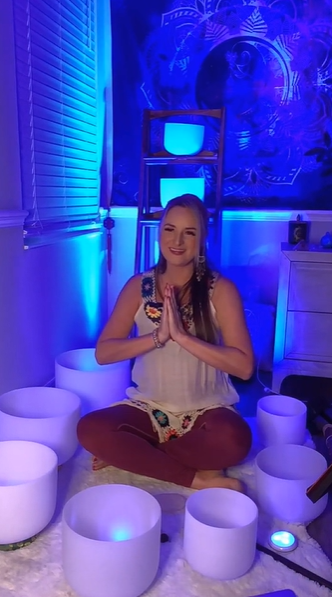
The easiest, most affordable way to try a sound bath is online. My Peace Guru hosts live New Moon and Full Moon crystal singing bowl sound baths on Zoom every month — you lie in your own bed, put on good headphones or speakers, and let the frequencies do their work.
Related reading:
- How much does a sound bath cost?
- How to become a sound bath practitioner
- Sound healing near me — NYC & LA guides
- Live online sound baths
Frequently Asked Questions
How long does a sound bath last? Most sound baths run 45–75 minutes, with the immersive sound portion lasting 30–45 minutes and the rest for guided meditation and integration.
Can anyone do a sound bath? Yes — sound baths are safe for almost everyone. If you''re pregnant, have a pacemaker, epilepsy, or a serious mental health condition, check with your doctor first and let your facilitator know.
Will I feel anything? Most people feel deep relaxation, physical vibration, and mental quiet. Some people see colors, drop into vivid imagery, or even fall asleep. All of it is normal.
How often should I do sound baths? Once a month is a beautiful baseline. Weekly is transformative. Many members of Sacred Healing Community™ join every new and full moon for ongoing nervous system reset.