
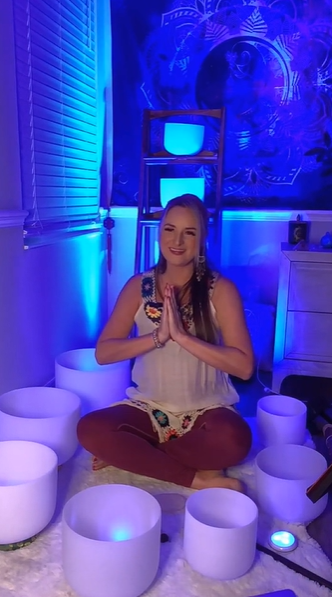
 Michelle Hummel
How to Choose Crystal Singing Bowls: A Beginner's Guide
Choosing your first crystal singing bowl can feel overwhelming. There are frosted bowls, clear bowls, practitioner sets, and endless talk of frequencies and notes. This guide walks you through how to choose a bowl based on your healing intention, not marketing hype.
Frosted vs. Clear vs. Practitioner Bowls
Frosted quartz bowls are the classic white bowls most people picture. They are made from crushed quartz fused at high heat, produce a warm, enveloping tone, and are the most affordable entry point. Their sound carries well in a room, which makes them ideal for group sound baths and home practice.
Clear (optically clear) quartz bowls are made from pure fused quartz and look like glass. They produce a bright, focused, higher-pitched tone that travels far and sustains for a long time. They are lighter, more portable, and considerably more expensive, so they are usually a second purchase rather than a first.
Practitioner bowls are matched sets — often 3, 7, or 8 bowls tuned to complementary notes — used for professional sessions. Buy a set only after you know which single bowl you reach for most, because a mismatched set is harder to play than one well-chosen bowl.
What 432Hz Actually Means
Every bowl is tuned to a note (C, D, E, F, G, A, B) and a tuning reference. Most modern instruments use A=440Hz. Bowls tuned to A=432Hz are slightly lower and are often described as warmer and more grounding. Neither tuning is "correct" — 432Hz is a preference, not a requirement.
What matters more than the number is whether the tone settles your nervous system. If a bowl makes your shoulders drop when you hear it, that is the right bowl for you.
Choose Your Bowl by Intention
- Grounding and anxiety relief — a larger, lower bowl in the note C or D. Bigger bowls (10–14 inches) produce deeper tones you feel in the body.
- Heart opening and grief work — the note F, traditionally associated with the heart center.
- Clarity, focus, and expression — the note G or B, brighter and higher.
- Sleep and deep rest — a low frosted bowl played slowly with a suede mallet.
- Travel and client work — a smaller clear quartz bowl, 6–8 inches.
Practical Buying Checklist
- Listen before you buy. Request an audio or video sample of the exact bowl, not a stock recording.
- Check the size. Diameter drives pitch: larger equals lower.
- Confirm the mallet. A suede mallet gives a soft sustained tone; a rubber mallet gives a sharper strike.
- Ask about the note and tuning reference (for example, "F, A=432Hz").
- Inspect for chips. A chipped rim changes the tone and makes the bowl fragile.
- Buy one excellent bowl before buying a set.
Caring for Your Bowl
Store your bowl on a rubber O-ring or in a padded case, keep it away from edges and pets, clean it with a soft dry cloth, and never place a hot or heavy object inside it. Quartz is durable but brittle at the rim.
Ready to Go Deeper?
If you are moving from curious listener to practitioner, the Sacred Sound Healer Certification™ Pathway teaches bowl selection, playing technique, and trauma-informed facilitation. You can also experience a live sound bath before you invest in your first bowl — hearing the difference in person is the fastest way to know what resonates with you.