 Michelle Hummel
TL;DR — Your return-to-peace practice is the small, repeatable thing that reliably settles your body and mind — breath, sound, movement, water, silence, or nature. Naming it in advance means you do not have to search for calm while you are already overwhelmed. Choose one, practice it today, and let it become your anchor.
Ask yourself: What brings me back to peace when I feel off-centered?
Not what should work. Not what someone else swears by. What actually, reliably softens your shoulders and slows your breath.
Most of us know the answer, and most of us forget it exactly when we need it most.
Why we forget our own medicine
When you are dysregulated, your nervous system narrows its focus to threat and urgency. Creative problem-solving goes offline. That is why "I will figure out how to calm down once I feel bad" is a plan that never works — the moment you need the practice is the moment you are least able to think of it.
The fix is simple: decide now, while you are steady, what your return-to-peace practice is. Then it becomes a door you can find in the dark.
Six doorways back to center
- Breath. A slow exhale longer than the inhale tells your body the emergency is over. Four counts in, six or eight counts out, for two minutes.
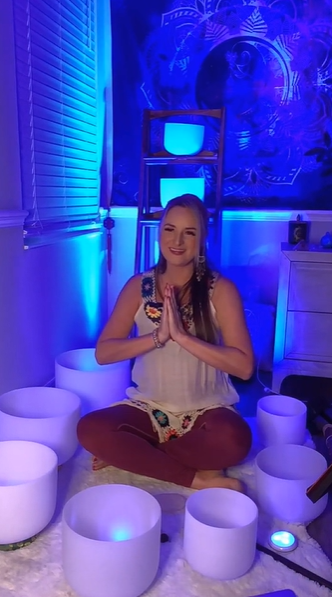
- Sound. A single crystal bowl tone, a hum in your chest, or a sound bath recording. Vibration reaches the body faster than reasoning does.
- Movement. Walking without your phone. Shaking out your hands. Gentle stretching on the floor.
- Water. Cool water on your wrists and face, or a long shower with no agenda.
- Nature. Ten minutes outside, bare feet on grass if you can, eyes on something further than an arm's length away.
- Silence. No input. No podcast, no scrolling. Just you and the room.
None of these are complicated. That is the point. A practice you can only do on a good day is not a practice — it is a luxury.
How to know it is your practice
A true return-to-peace practice has three qualities:
- It is short. Under ten minutes, or you will skip it.
- It is available. You can do it in a car, a bathroom, a hotel room, a hard week.
- Your body recognizes it. Something in you exhales before you even begin.
If a practice requires a perfect setting, a free hour, and the right mood, it is a ritual you love — not an anchor you can rely on.
Forcing versus flowing
Here is the deeper pattern. Feeling chronically off-centered is rarely about one bad day. It usually means you have been forcing — pushing through, overriding signals, keeping a pace your body never agreed to.
Flowing does not mean doing less. It means doing what is actually yours to do, at a rhythm you can sustain. The return-to-peace practice is how you check which mode you are living in.
Return to that practice today
You do not need a new system. You need to go back to the thing that already works for you and do it — today, once, without making it a project.
Name it. Put it somewhere you will see it. Do it before you feel like you have earned it.
Not sure whether you are forcing or flowing?
If you cannot tell whether you are moving with life or pushing against it, that is worth knowing — gently and honestly.
Take the free Alignment Quiz: Are You Forcing or Flowing?
It takes about three minutes, looks at five areas of your life, and gives you a personal snapshot plus three practices you can begin today. No purchase, no pressure — just clarity.
Frequently Asked Questions
What does it mean to feel off-centered?
Feeling off-centered usually means your nervous system is running faster than your life requires — you feel scattered, reactive, or oddly numb. It is not a character flaw. It is a signal that you have been giving out more than you have been taking in, and that a return to a grounding practice is due.
How long does it take to feel calmer?
Many people notice a shift within two to five minutes of slow, extended exhales or sustained sound. Deeper regulation — sleeping better, reacting less — typically builds over one to three weeks of daily practice, because you are teaching your body a new baseline, not just calming a single moment.
What if I do not have a practice yet?
Start with breath, because it needs nothing but you. Four counts in, six counts out, for two minutes, twice a day. Once that feels familiar, try adding sound or a short walk outdoors and keep whichever one your body responds to most.
Can sound healing help me return to center faster?
Yes for many people. Sustained tones from crystal singing bowls give the mind a single thing to follow, which shortens the time it takes to drop out of mental looping and into the body. A ten-minute recording is often enough on an ordinary hard day.
How do I remember my practice when I am overwhelmed?
Decide in advance and make it visible — a note on your mirror, a recurring alarm named after the practice, or bowls left out where you can see them. In an overwhelmed moment you should be following a decision you already made, not making a new one.